
If you’re newer to travelling, in a rush to get organized, or just looking to see if any part of your packing process could be made a little easier, this post may be useful to you. I break down the four categories of bags I use for packing, and some tips for saving money.
Let’s get started with establishing some goals so you have a better idea of which bags to choose. You can make a short mental list of a few desires, like: having enough empty space for souvenirs, ease of travel with luggage, stylish accessories, etc. My personal priorities are usually:
With these things in mind, we can save more money for our travels and we don’t contribute as much waste in the environment.
Four simple steps to start the packing process
For travel with a carry-on bag and a personal item
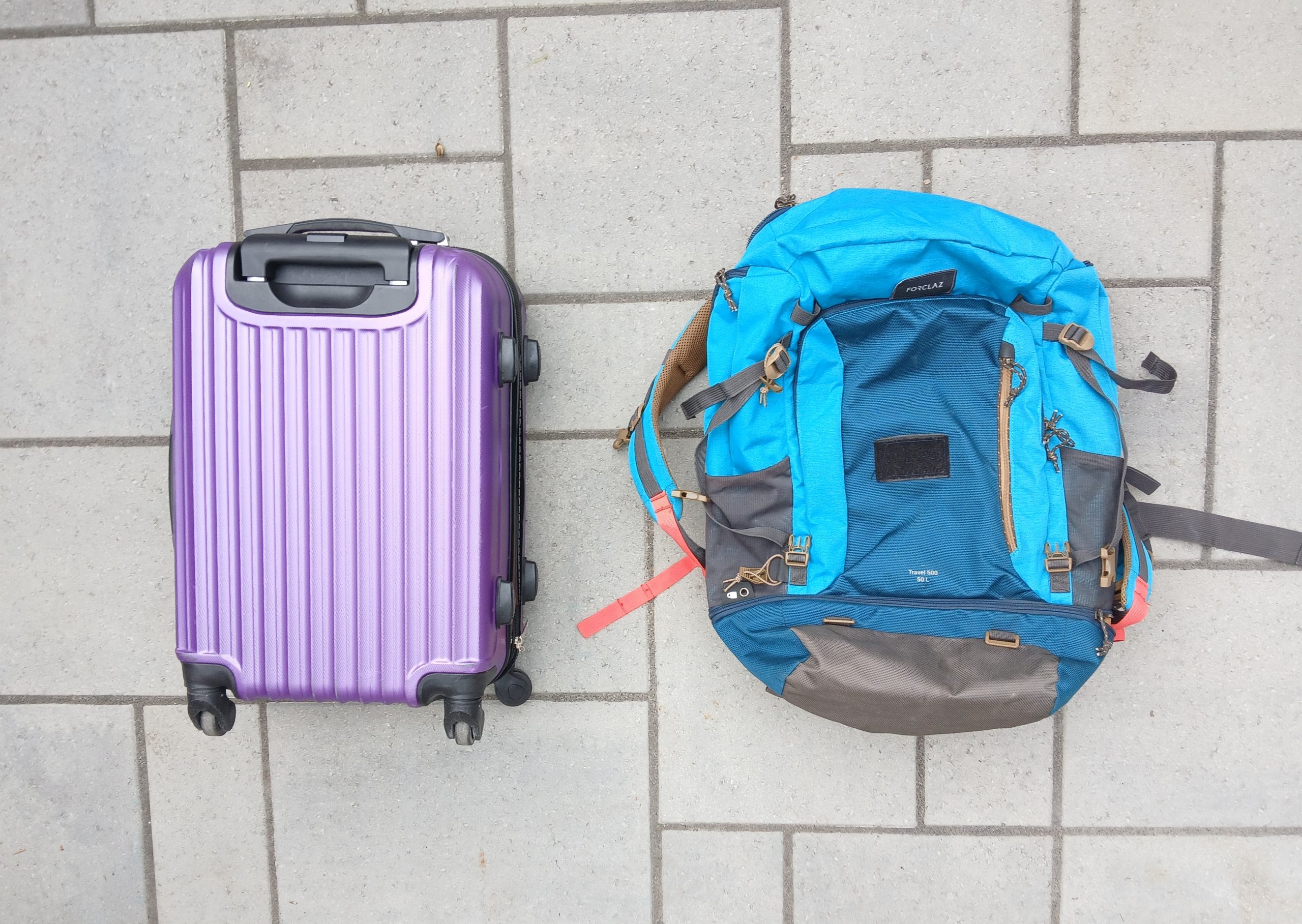
1. Choose a main bag (suitcase or backpack)
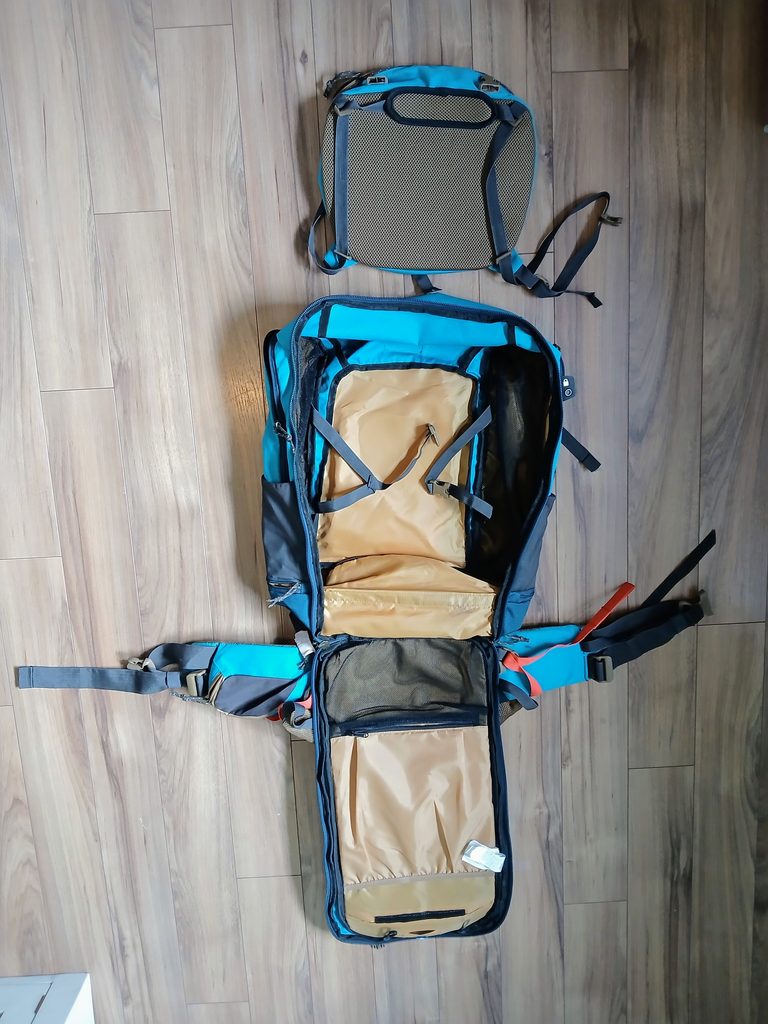
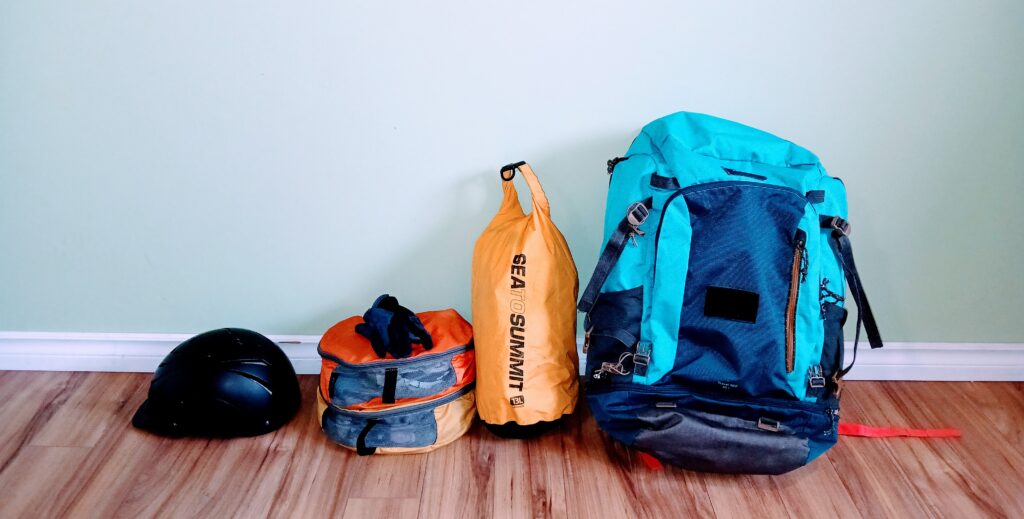
Step 1: Identify which type of bag works best for your trip. A suitcase maximizes space and is easy to move around (as long as you won’t encounter too many staircases!). A backpack makes moving over uneven ground a lot easier, but keeping it lightweight can sometimes be a challenge. This blue 50L backpack (pictured right) I got from Décathlon does fit the size requirements for a carry-on item – as long as it’s not filled to max capacity.
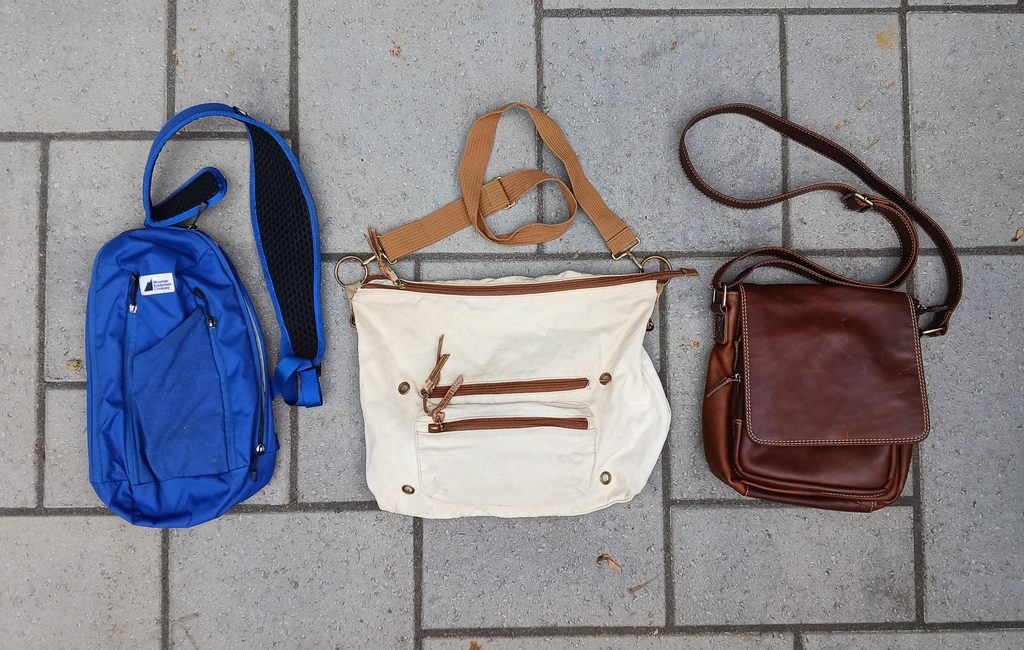
2. Choose your personal item
Step 2: Decide on your day bag style, and read your trip itinerary to see what will work best. Will a more casual, water-resistant cross-body bag or backpack be more useful to you on a hiking trip? Or do you want a more stylish (yet durable) canvas or leather bag for walking around town? There is no wrong answer, and at the end of the day the most important things will be whether the bag is comfortable to wear and if the material is good quality, so it can last you for years to come.
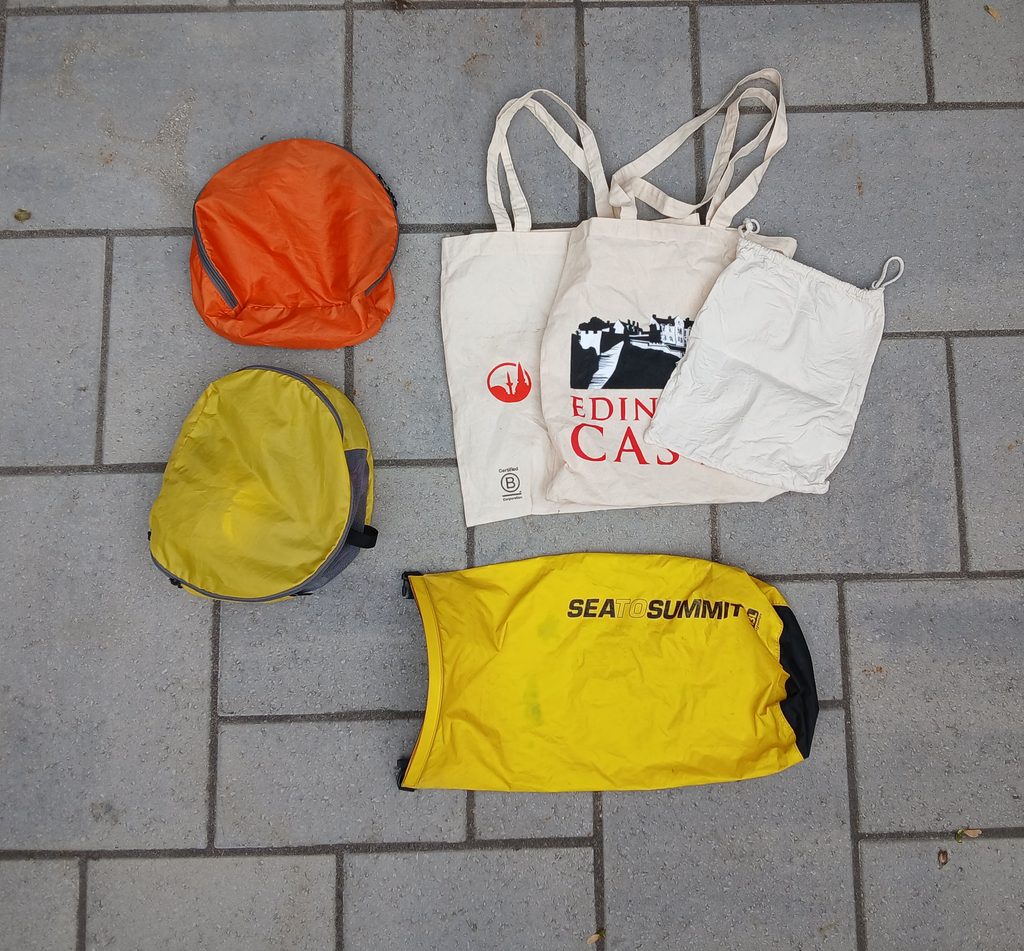
3. Get packing cubes or reusable bags
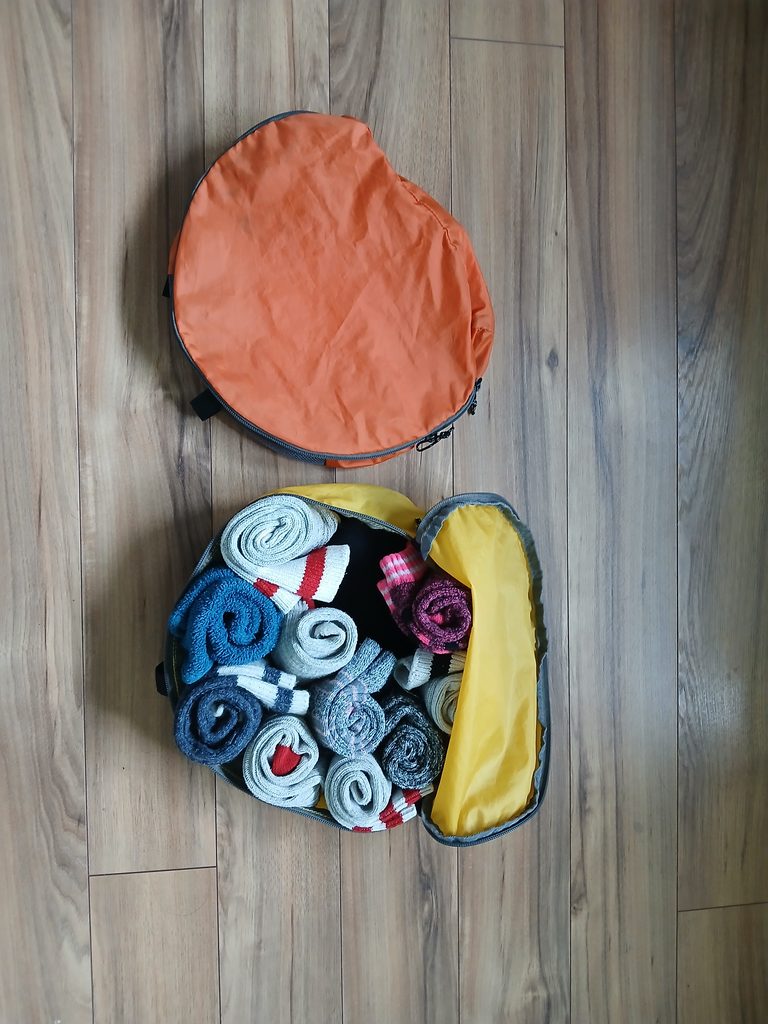
Step 3: Organize your clothing and electronics. I have two packing cubes which I got from Décathlon, while the rest of my sorting bags are just repurposed storage or shopping bags. The yellow packing cube stores socks, underwear, bras and sometimes a bathing suit. I keep the orange packing cube empty, and slowly migrate all my dirty laundry into it as the trip goes on (mostly socks & underwear). The rest of my things are sorted into cloth bags (for clothes) and a dry sack (for electronics).
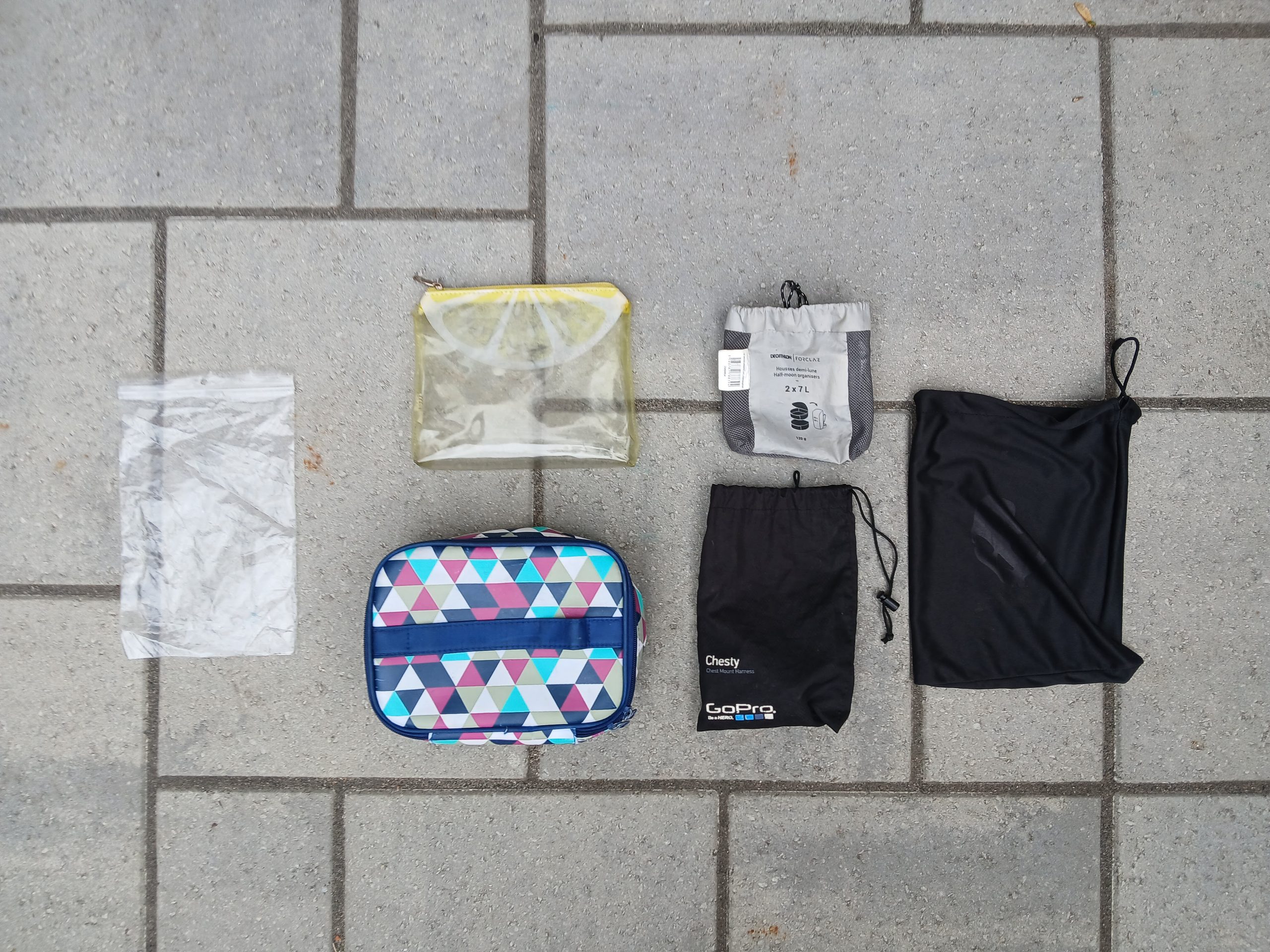
4. Little bags for little things
Step 4: See if you have any small bags or pouches already in your home. Small bags made of plastic or fabrics are great for sorting some of your most important items. A plastic zip-seal bag can store bandages, laundry soap strips, and photocopies of important documents (things that need to stay dry). The clear, yellow toiletries bag I have here is used for liquids I am bringing in my carry-on. The opaque toiletries bag is used for the rest (solid creams, toothpaste tabs, soaps, etc.). My cloth bags hold my electronics, from my action camera, to charge cords, to power banks.
Suitcase vs. Backpack: Pros and Cons
Backpacks
Advantages
- Multiple pockets for additional sorting and storage options
- Soft and flexible, so it can be squished into odd spaces
- Easier to carry on uneven surfaces, up and down staircases, etc.
- Can attach extra objects to the exterior
- Some treks require a soft luggage bag (as opposed to a suitcase)
Disadvantages
- You have to carry it everywhere, so keep it light. Additionally, if you are wearing clothes with nicer fabrics, the shoulder straps can rub against them and cause excess wear. Just make sure to reserve your nicest clothes for non-travel days
- Not all backpacks are waterproof. Some come with a rain cover which is usually located at the bottom of the bag
- It can be harder to protect delicate souvenirs in a backpack. In the past, I’ve packed a small cardboard box in my bag so my souvenirs and gifts all make it home in one piece
- It makes your body “bigger” than you are used to. Meaning, you have to be more aware of your closest surroundings and other people. It would not be nice to accidentally whack someone with it while turning around!
Suitcases
Advantages
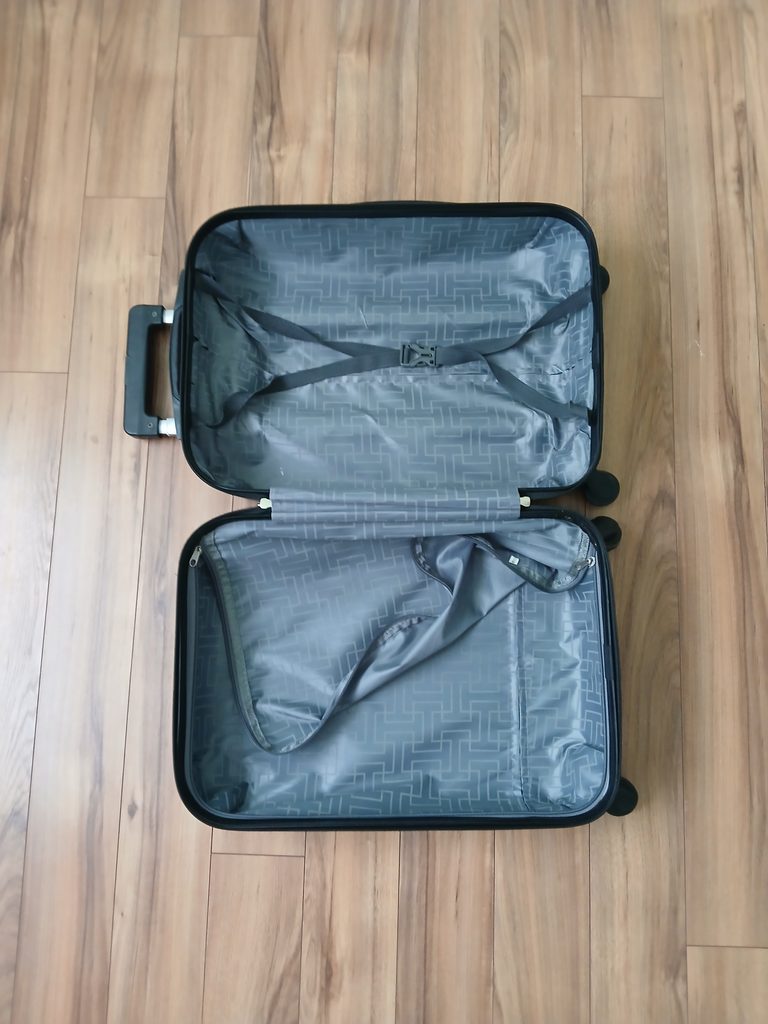
- Packing space is maximized
- Usually rigid or sturdy enough to protect delicate electronics or souvenirs
- Very easy to transport along flat ground
- The flat sides are better for keeping papers or art protected
- Very easy to see everything you’ve packed (once opened)
Disadvantages
- Can be very awkward to carry up staircases or along bumpy ground, especially when it’s a bit heavy
- The rigid shape can be more difficult to fit in small spaces
- There are usually fewer interior pockets for organizing
- To access a single item on-the-fly, you need to open/unzip the entire suitcase. With a backpack, you could store the item in an outer pocket or close to the opening
Sorting stuff: Packing cubes, dry sacks and cloth bags
Packing Cubes
- Great for sorting clothes by level of cleanliness! I have two equal-sized packing cubes for underwear and socks, and after wearing them I can just move them right into the “dirty clothes” packing cube.
- Having different colours can help you easily spot which bag you need (pyjamas, fancy clothes, or trekking gear)
- Some packing cubes are also “compression” cubes, and help you squeeze down the clothing using extra zippers, providing you with more space
Dry Sacks
- Great for keeping things dry (clothes, food, electronics)
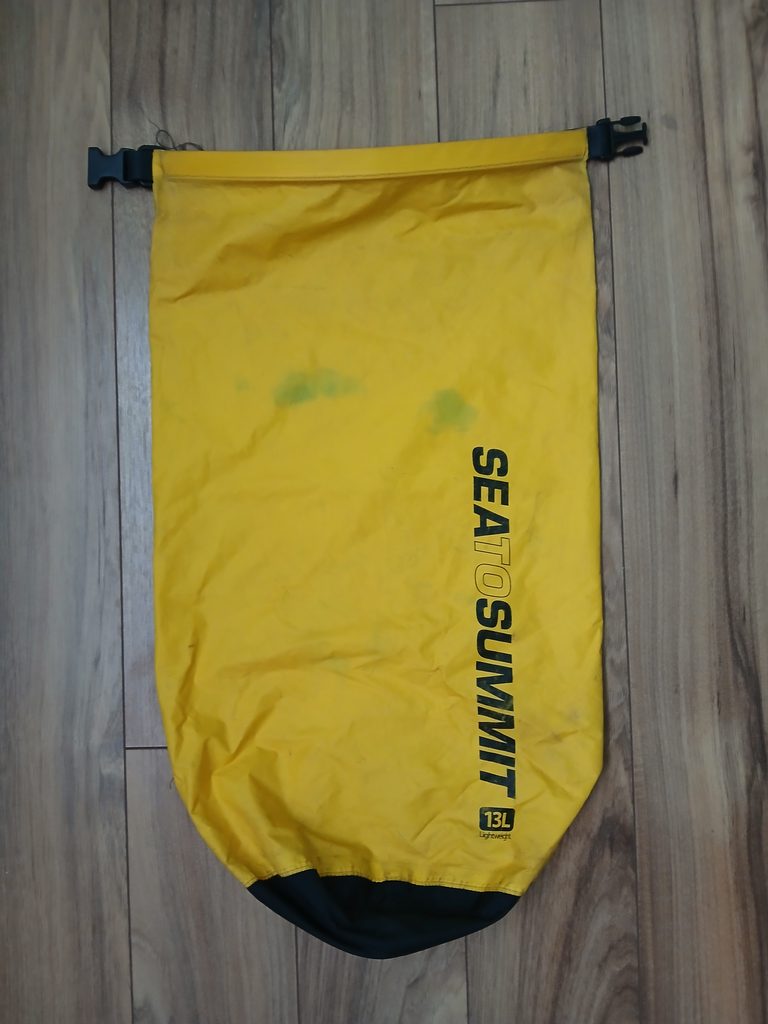
- I use mine for all my electronics and charge cords, so I always know where they are. It is easier to find this bag and pull it out at the airport security when needed
- Washing clothes when you only need a few things washed or don’t have access to washing machine or sink. I have added a bit of water and a laundry detergent strip to my dry sack and shaken it around to clean a few items off clothing. Note: It might be better to turn it inside out first so the water-resistant exterior is what comes in contact with the water and soap
- I bought my 13L lightweight Sea to Summit dry bag in 2014, and it is still going strong (with a few stains here and there). I would definitely recommend that you check out this brand if you are thinking about getting a dry bag as mine is now 12 years old
Cloth Bags
- Great for organizing your clothes – just like a packing cube!
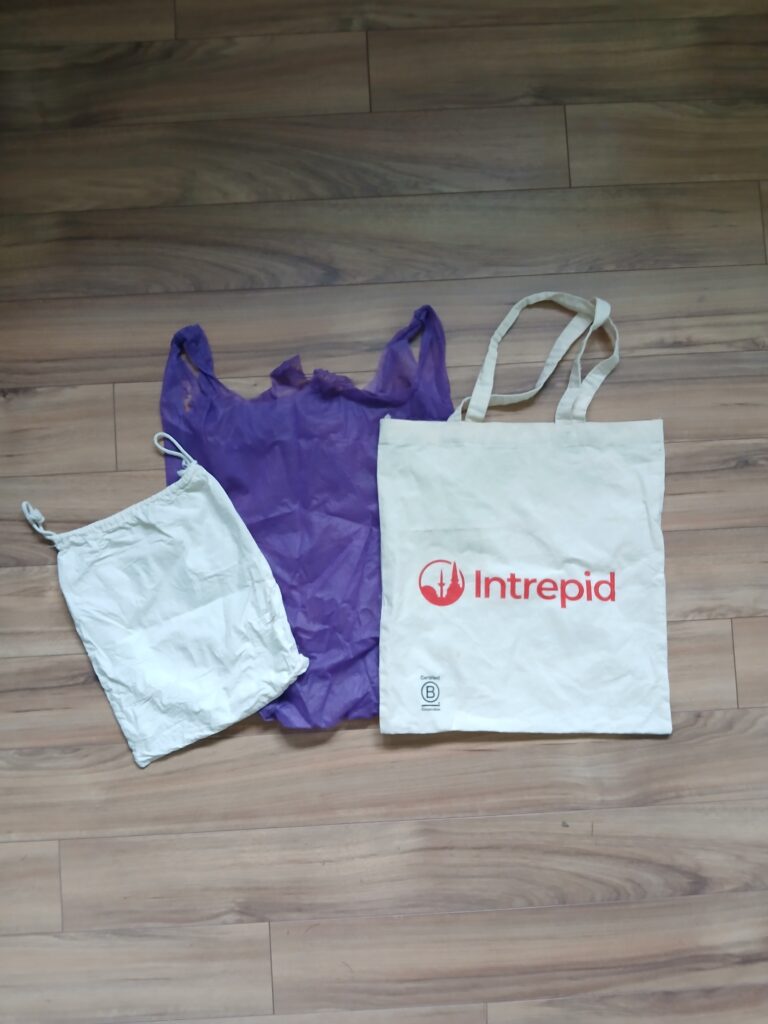
- I use a cotton drawstring bag that came with a clothing order to store & protect my nicer things (linen tops & pants, dresses or evening wear)
- A re-useable grocery bag is great for storing extra pairs of shoes or sandals, providing another layer of protection for your clothes and souvenirs
- The most budget-friendly option, as we tend to already have at least one or two (or 10 -15…) of these bags in our homes
For more packing tips, check out my other posts
My Complete Packing List for Horse Riding Holidays
As the title suggests, this is an all-encompassing checklist of items I have brought on horse treks, and useful extras that complement…
How to prepare for your first Horse Trek
Hooray! You’ve decided to combine travel and horse riding, and you’ve chosen your first trek… Now what? To help you make the…
Outfit ideas for Horse riding – How to dress for different conditions
It can be difficult to know what to pack for a multi-day horse trek, or even a short trail ride. Usually, your…
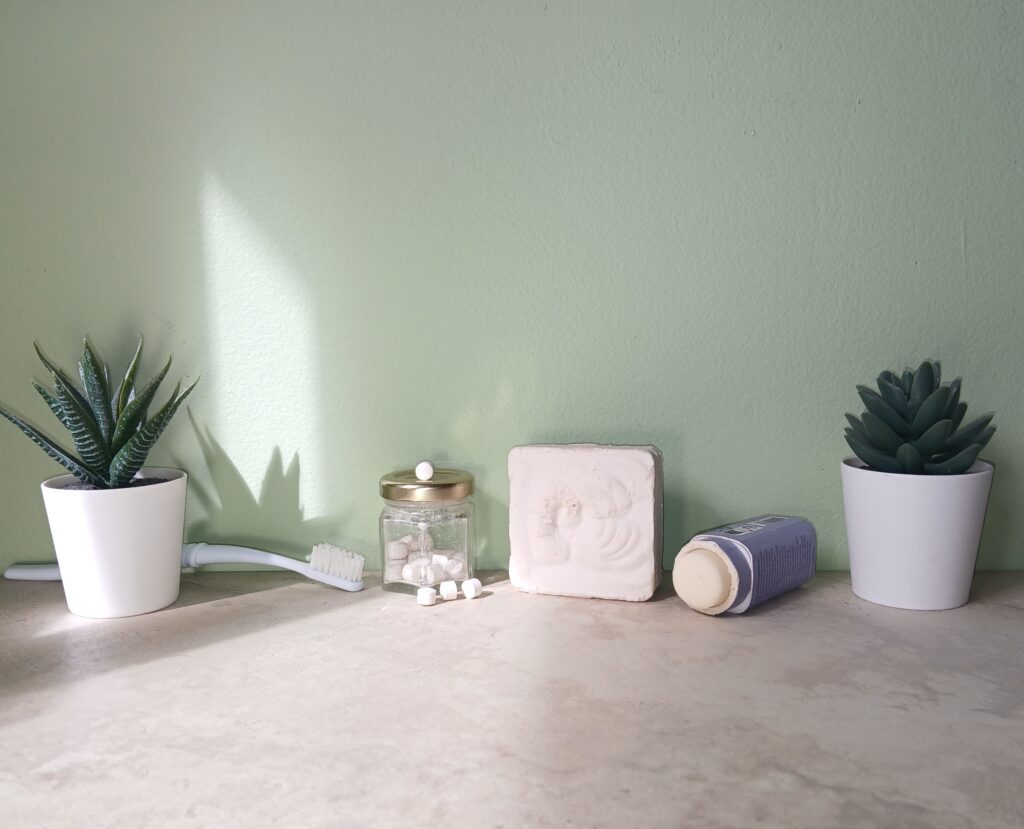
My favourite liquid-free products for travelling (and my home)
*Please note the following post contains affiliate links. This means I earn a small commission if you make a purchase after clicking…